

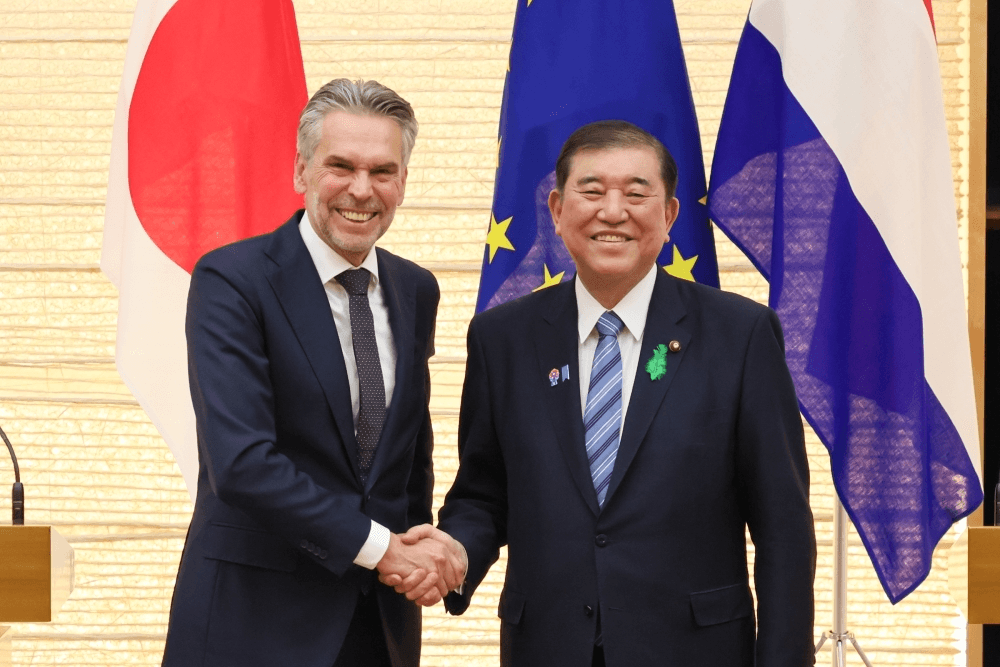
In April 2025, the Prime Ministers of Japan and the Netherlands signed an Action Plan, updating a Strategic Partnership Agreement in 2025. One of the key pillars in the plan was cooperation on semiconductors. “Both [Japan and the Netherlands] have companies that accelerate semiconductor technology. For our prosperity and strength it is vital to strengthen and protect our leading positions,” said former Dutch Prime Minister Dick Schoof.
However, the cooperation on semiconductor is not as easy as it seems; the more Japan deepens the cooperation with the Netherlands, the more it relies on the Netherlands. This could undermine Japan’s “strategic autonomy,” which is important for its economic security. Given this possibility, Japan might withdraw from the cooperation to pursue its own interests.
Can Japan and the Netherlands deepen their cooperation in the semiconductor sector without compromising their strategic autonomy?
On 24 November, join us for a presentation by researcher Akio Tamura, who will share the findings of his research conducted over the past six months. Drawing on game theory, his research examines the dynamics of bilateral semiconductor cooperation between Japan and the Netherlands, exploring how countries with shared values and interests navigate situations in which cooperation does not necessarily benefit both sides equally.
The presentation will be followed by an interactive Q&A session: an opportunity to discuss the future of Japan-Netherlands relations in one of the most strategically important industries.
This lecture is part of the LAC Asia Academy series, which brings together academic, business and government experts to deepen public understanding of contemporary developments in East, South and Southeast Asia. The event is open to everyone and offers a unique opportunity to engage directly with leading specialists on one of the most important geopolitical challenges of our time.