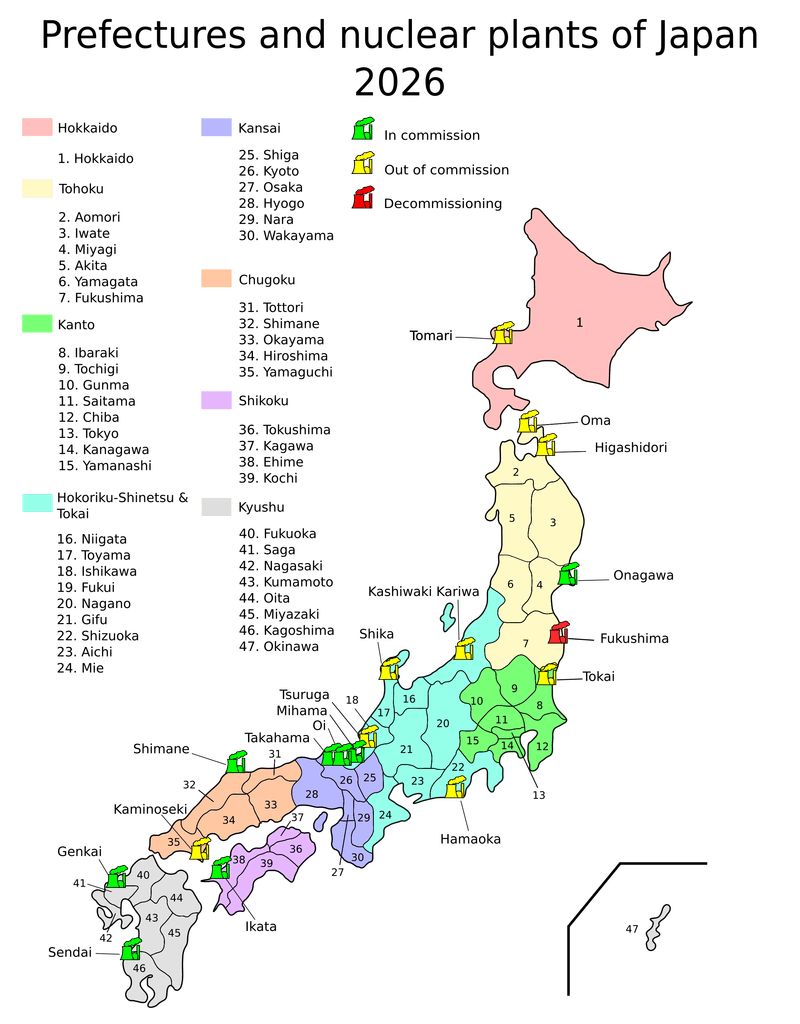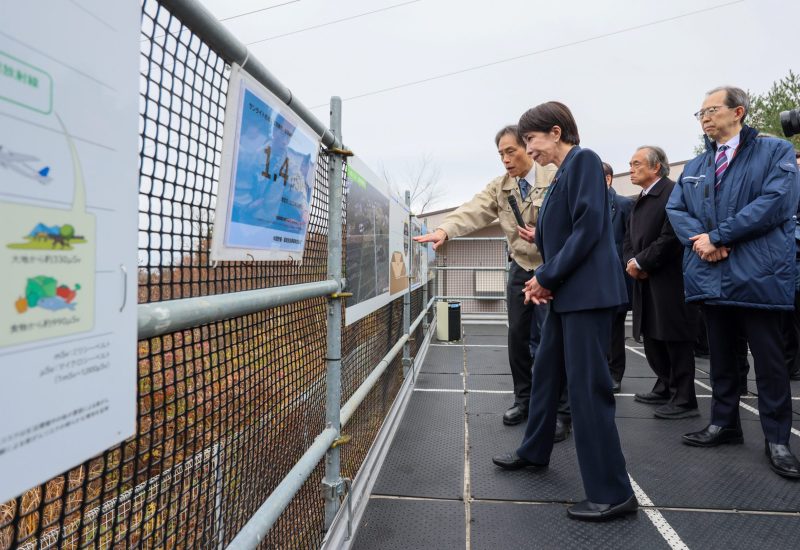

Japan has committed to expanding nuclear power. But delivering on that ambition depends less on Tokyo and more on the coastal districts where the nuclear power plants are located. In Japan, restarting a reactor requires the consent of the relevant prefecture and municipality, making local politics an important part of national nuclear policy.
This report examines what national politicians representing these communities promised during Japan’s 2024 and 2026 House of Representatives elections. The study analyses 1,724 candidate manifestos from five major parties, alongside 110 regional party manifestos covering 11 electoral regions. It asks whether the presence of a nuclear power plant affects whether candidates discuss nuclear power—and, when they do, what they say.
Key findings
- Nuclear power was not a leading campaign issue. Most candidates did not mention it at all.
- Georaphy mattered. Candidates running in districts containing a nuclear power plant were roughly twice as likely to mention nuclear power as candidates in districts without one.
- Candidates near nuclear plants were also more specific. They were substantially more likely to name the particular nuclear power plant located in their district.
- Local proximity was associated with qualified positions. Across both elections, no candidate representing a nuclear-plant district explicitly endorsed nuclear power without qualification. Conditional support frequently referred to the need for local consent.
- Party and candidate behaviour differed. At the party level, proximity to nuclear facilities sometimes encouraged parties to take a clearer position. At the candidate level, proximity tended to produce more cautious and qualified positions.