

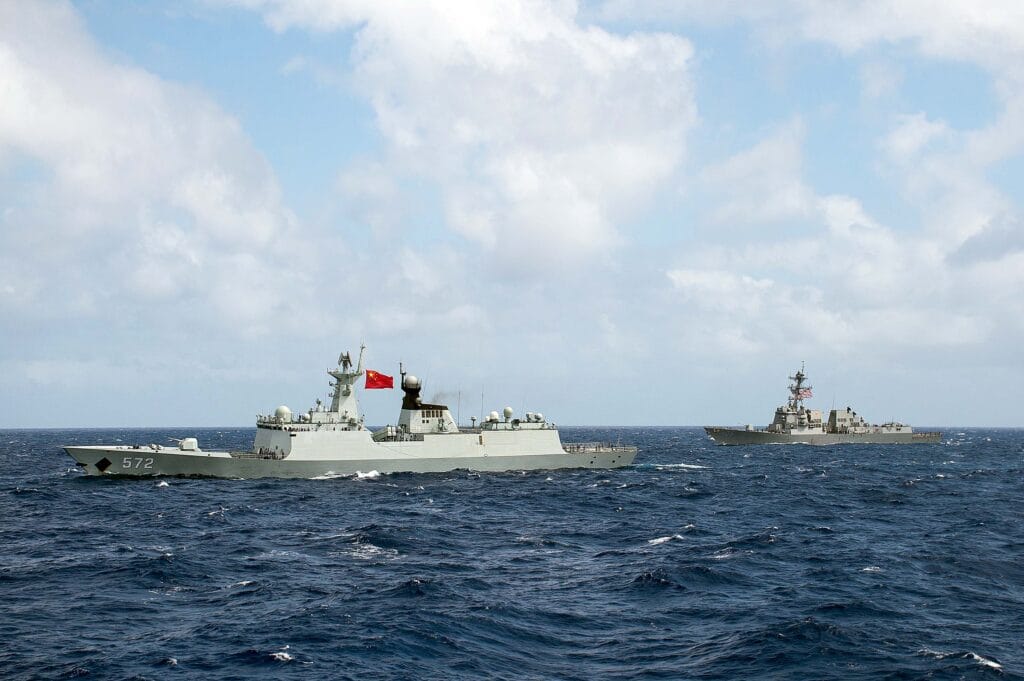
China has increasingly used a combination of naval, coastguard, civilian and paramilitary forces to advance and protect its maritime interests. Alongside the Chinese navy and coastguard, the maritime militia plays an important role, particularly in activities that fall below the threshold of open military confrontation. In recent years, these activities have become increasingly visible not only in the South China Sea, but also in the East China Sea.
In this CKN Knowledge Event, Dr. Benjamin Blandin will examine the development of Chinese asymmetric maritime behaviour along the first island chain. He will focus in particular on the South China Sea and Taiwan. The presentation will explore the different means China employs to deny access, conduct hybrid operations and pursue its interests through so-called grey-zone tactics.
Dr. Blanding will focus (a.o.) on the growing use of unmanned, hybrid and unconventional naval platforms, as well as civilian and paramilitary auxiliaries. Recent large-scale formations of Chinese fishing vessels in the waters north of Taiwan and in the East China Sea raise questions about the changing role and capabilities of China’s maritime militia.
The discussion will consider what these developments mean for the regional maritime security environment, including China’s relations with Taiwan, Japan and other countries with competing maritime interests. It will also address how civilian and paramilitary vessels can be used for reconnaissance, logistics, disruption and other activities while providing Chinese authorities with a degree of plausible deniability.
At a time of growing strategic competition in the Indo-Pacific, understanding China’s increasingly diverse maritime capabilities and the ways in which they are deployed is becoming increasingly relevant for policymakers and other professionals working on China and regional security.