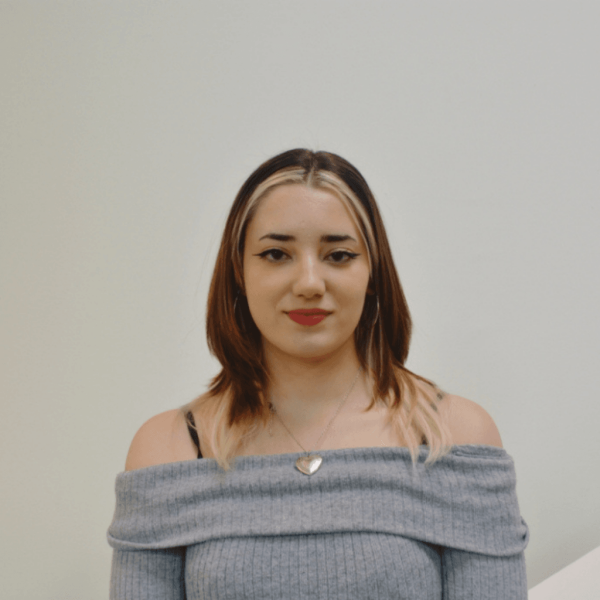
Elisa Fernández Gallego holds a Bachelor’s degree in East Asian Studies with a focus on Korea from the University of Málaga (Spain), and she is currently completing an Advanced MSc in International Relations and Diplomacy at Leiden University in the Netherlands.
During her undergraduate studies, Elisa developed academic expertise in East Asia, particularly the Korean Peninsula. She pursued two exchange semesters in South Korea —first at Sungkyunkwan University and later at Seoul National University— where she immersed herself in Korean language, culture, and knowledge on regional contemporary geopolitics. These formative experiences enabled her to gain first-hand insights into the dynamics of Northeast Asia.
Elisa’s academic path has been characterized by a commitment to research, comparative analysis, and linguistic competence. At Leiden University, Elisa is part of the Advanced MSc in International Relations and Diplomacy (MIRD) programme, a graduate programme on International Relations held jointly with the Clingendael Institute. This programme provided Elisa with practical training in negotiation, diplomacy, and policy analysis. The program has allowed her to participate in a series of professional visits and workshops with prominent international institutions in The Hague, including the Organisation for the Prohibition of Chemical Weapons (OPCW) and the International Court of Justice (ICJ).
Within the MIRD community, Elisa has also taken on leadership roles in student-led initiatives aimed at fostering academic discourse and practical exposure. She has participated as an active member of the International Relations Study Association (IRSA), contributing to strengthening the engagement with diplomatic missions and cultural institutions, and coordinating seminars and visits that connect students with foreign policy practitioners and embassy representatives.
Elisa’s research interests lie at the intersection of soft power and diplomatic practice, with a particular emphasis on the political and strategic dimensions of the Korean Peninsula. Her work explores how soft power instruments —such as cultural diplomacy, educational exchanges, and public engagement— shape bilateral and multilateral relations in East Asia, while also contributing to broader debates about normative influence and foreign policy strategy in an increasingly interconnected world.
Her previous academic work examined key aspects of inter-Korean relations and global diplomatic frameworks, situating her analysis within both historical context and contemporary policy challenges. This project reflected her interest on integrating interdisciplinary perspectives —including political science and cultural studies— in the study of a complex geopolitical context.
She is currently part of the Projects & Communications team as an intern, contributing to project coordination and communications strategy. In this role, she collaborates on preparing outreach materials and supporting events that connect academic research with broader public and institutional audiences.
She engages in public events, discussions, and academic forums that focus on global governance, peacebuilding, and cross-cultural understanding. Her academic and extracurricular involvement reflects a broader commitment to fostering constructive dialogue between cultures, advancing collaborative solutions to global challenges, and supporting inclusive diplomatic engagement in an era marked by rapid geopolitical shifts.
Looking ahead, Elisa plans to continue her professional trajectory in the fields of diplomacy, international policy analysis, or research institutions, with the aim of bridging academic insight and policy practice. She is dedicated to contributing to policies and programs that advance mutual understanding, constructive engagement, and sustainable cooperation on regional and global scales.